
Ian Cochran (1971)
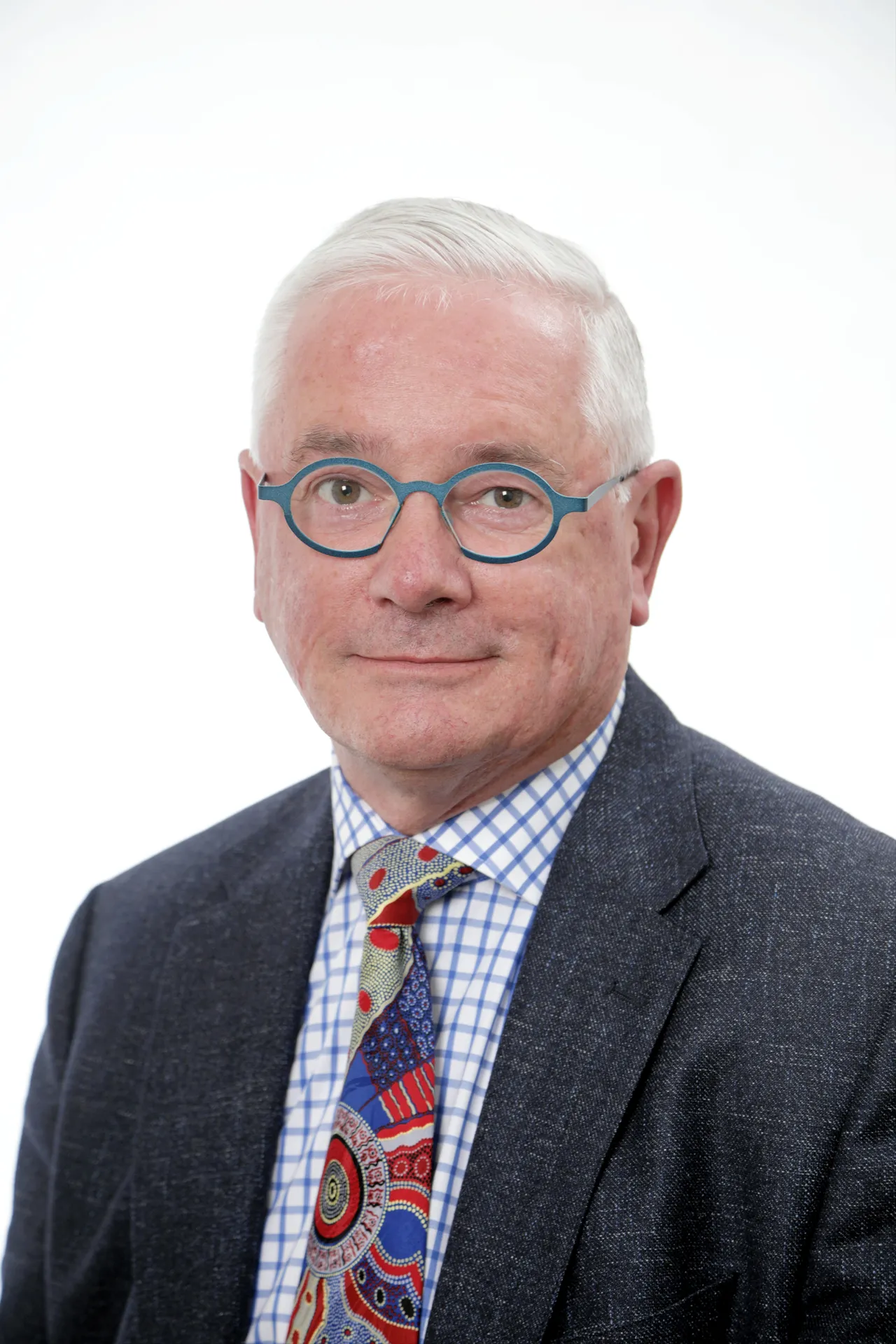
Working on major marine construction projects around the world over four decades has given Ian a rich and rewarding career. But it has been the people and places along the way that have provided the most fulfilling experiences.
As a civil (structural) engineer, Ian’s work has taken him to the Middle East, the Gulf of Mexico, the Caspian Sea and the Asia Pacific area and has involved the design, construction, installation and commissioning of offshore facilities for major oil and gas companies.
While marine construction has provided Ian with a rich and rewarding career, he notes it is a branch of engineering that remains largely overlooked.
Career pathway
Ian’s introduction to marine construction began at university when his engineering class was set a design assignment by the consulting engineers working on the design of offshore platforms in Bass Strait.
After graduating, he secured an entry level job with the international contractor that had been doing the installation work in Bass Strait at their regional headquarters in Singapore. Starting as a site engineer on installation projects in the South China Sea —predominantly in Malaysia, Brunei and Indonesia—Ian went on to spend several years providing operational support for installation projects throughout Southeast Asia and Australia.
Highlights
Among his many experiences, a couple stand out as defining moments for Ian.
As a young engineer working on the installation of the first fixed platform off the coast of Sabah in East Malaysia, Ian’s team faced a major challenge. The foundation piles could not be driven to the required depth due to an unexpected impenetrable rock formation beneath the seabed.
“We were in a remote location with limited resources. Rather than abandon the project, with a great deal of applied ingenuity and much true field engineering, we managed to reverse the process. The substructure was refloated and repositioned to a new location a couple of hundred metres away where the platform was ultimately safely installed and continued to operate for several decades.”
Years later, Ian led a project off the US coast involving the design of a Spar platform. The innovative design featured an open truss section in the upper water column to enable wave energy to pass through the structure.
“When Hurricane Katrina passed through the Gulf of Mexico and caused enormous damage in Louisiana, most platforms in the Gulf were toppled or damaged and virtually all were out of production for a significant period. Only the trussed Spar resisted the massive force of a direct hit from Katrina and continued operating throughout.”
Ian’s time at Grammar
I was fortunate to be at Grammar when student numbers were quite small, and we had many outstanding teachers, known as masters to us, who were positive influences on us.
“For me, Kostas Rind was the most influential. Our senior Maths and Physics master, he was not just a gifted mathematician but a sage who taught with a European philosophy and passed on his enormous knowledge with great sensibility. For those of us who pursued careers in STEM, Kostas was undoubtedly a positive influence.”
“Martin Winkler was a big influence during my Middle School years. He passed on his life experiences from an unusual and varied career and I’m sure that a significant reason for my taking German at Year 12 was to continue to hear his stories.”
“There were many others. Jack Dart, who was a great educator who challenged us with Logic in Year 7. Graham Watts, who made learning Latin fun. Michael Boyle, who introduced us to Latin and later taught us English and English Literature. Ian Buerckner, an approachable form master and English teacher. Michael Rasmussen, a cultured man with deep credentials in the humanities. Geoff Tunbridge, who was capable and fun in both Chemistry class and on the sporting field. Bob Bath, who provided great support throughout my athletics years.
And Jack Nevett, our rowing coach who led our crew to a strong win in the 1971 Head of the Lake.”
“I was fortunate to participate in a variety of co-curricular activities at Grammar. I had a busy schedule in Year 12: rowing in the Head of the Lake in Term 1; playing the lead role in the school play in Term 2; and serving as Captain of Athletics in Term 3. I came to believe that participation in co-curricular activities tends to make well-rounded individuals as it requires time management skills and shows wider interests. I applied this thinking when employing young engineers, and I believe it served both me and the profession well.
Acknowledgement of Country
Ballarat and Queen’s Anglican Grammar School acknowledges the Traditional Custodians of the land on which we learn, live and work, the Wadawurrung People, and recognises their continuing connection to the land and waterways. We pay our respects to their Elders past and present and extend this to all Aboriginal and Torres Strait Islander People.
Commitment to Child Safety
Ballarat Grammar maintains a zero-tolerance approach to all forms of child abuse and actively implements measures to identify and manage any risks of harm to students within our school environment. The care, safety and wellbeing of children and young people are central and fundamental responsibilities of the School. We are firmly committed to fostering a child-safe culture that provides an environment where students are safe and feel safe, where their participation is valued, their views respected, and their voices heard in decisions that affect their lives. Ballarat Grammar values diversity and strictly prohibits any racist or discriminatory practices. All members of our school community share the responsibility to care for children and young people by promptly raising any concerns regarding their safety, promoting their wellbeing, and protecting them from all forms of harm or abuse.