

MIDDLE & SENIOR SCHOOL HANDBOOK
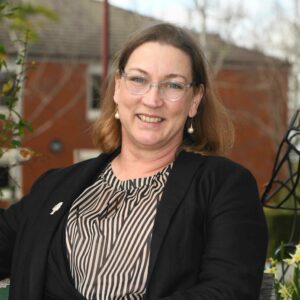
Head of Senior School
Brianne Cuthbert

Head of Middle School
Hanna Wise
KEY CONTACTS
SCHOOL OFFICE
Phone (03) 5338 0700
Fax (03) 5338 0991
PRINCIPAL
Mr Adam Heath
(03) 5338 0816
[email protected]
SENIOR STAFF
Head of Senior School (Years 10-12)
Mrs Brianne Cuthbert
[email protected]
Head of Middle School (Years 7-9)
Ms Hannah Wise
[email protected]
DIRECTOR OF BOARDING
Mrs Simone Healey
[email protected]
(03) 5338 0745
After Hours: 0455 222 919
Boarding Administrator
Sarah Gallagher
(03) 5338 0720
[email protected]
ADMISSIONS
Acting Director of Admissions
Ms Sue Clifford
[email protected]
Registrar
Mrs Sarah Brown
[email protected]
HEALTH CENTRE
(03) 5338 0852
[email protected]
DART HOUSE – BOYS
Head – James Castles
[email protected]
After Hours 0400 534 312
MOD on duty 0429 391 194
HAYHOE HOUSE – GIRLS
Head – Ms Kara Hart with Mr David Marriott
[email protected]
MOD on duty 0427 560 337
LARRITT HOUSE – GIRLS
Head – Mrs Emma Gill with Mr Eamonn Gill
[email protected]
MOD on duty 0428 316 720
WIGAN HOUSE – BOYS
Head – Mr Luis Alveraz with Mrs Mel Alveraz
[email protected]
After Hours 0415 398 578
MOD on duty 0429 391 196
WOODBRIDGE HOUSE – GIRLS
Heads – Paul Stephens with Danni Stephens
[email protected]
After Hours 0408 536 528
MOD on duty 0427 886 757
HOMEROOM & HOUSE SYSTEM
The goal of the Pastoral Care system is to put a safety net around each student and provide the support and environment for each student to thrive. In Years 7 and 8 students are supported by a Homeroom teacher and the Year 7 or 8 Pastoral Care Co-ordinator. The Homeroom teacher is the point of contact throughout the day for students and for parents when contacting the School regarding their child. Students are also part of a House from Year 7 and remain in this House throughout their time at Ballarat Grammar. The House system provides their pastoral care from Year 9 onwards when they will join a House mentor group. The House system is divided into fifteen Houses: Beckworth. Butler, Cuthbert, Dart, Hayhoe, Krome, Larritt, Macpherson, Manifold, Nevett, Queen’s, Robin, Smith, Wigan and Woodbridge, all named after people who have meant a great deal to the School. Mr. E.M. Butler headed the boys’ School from 1919 to 1937 and Butler House is named in his honour. An untiring and devoted patron of Queen’s for very many years was Mrs. Cuthbert. A House at Queen’s had been named in her honour and our House system carried on that fine tradition with Cuthbert House. Dart House is named after Mr. G.F.J. Dart, who died in 1978. He was Headmaster from 1942 until 1970. Hayhoe House commemorates Miss Sarah Hayhoe, a joint Principal of Queen’s from 1889 – 1918. Miss Victoria Krome was a Headmistress of Queen’s for seven years until 1942, when she became Head of The Hermitage in Geelong. Krome House is dedicated to her influence on her girls. The junior girls’ boarding house, Larritt House is named after Miss Esther Larritt, the other Head of Queen’s during that time. The Reverend A.S.M. Macpherson was School Chaplain during those same years. Macpherson House continues in his tradition of “guide, comforter and friend”. Manifold House was named after William and Edward Manifold, whose family had a long association with Ballarat and Geelong Grammar Schools, and whose generosity aided independent education in Victoria. Mr. J.D. Nevett, an Old Boy, coached the rowers for many years. He had been cox of the first crew in 1935. Nevett House remembers him. Dr. P.A. Robin was the first Headmaster of Ballarat Church of England Grammar School, taking up his position in February of 1911. Robin House perpetuates his memory. Smith House, begun in 1996, is named after recent headmaster Mr Barry Smith. Wigan House is named to honour Miss L.M. Wigan, who was Matron of the School from 1917 to 1925. Woodbridge House is named after the much-loved Miss E.W. Woodbridge, a former Headmistress of Queen’s. In 2022, two new houses were launched, Beckworth House and Queen’s House. Queen’s was once part of the title of the Girls’ School until 1902, and to preserve its significance, a separate Queen’s House was established in 1927, competing alongside other houses until 1972. Beckworth is named after the generous donor Clive Cleaver’s original property, representing the School’s gratitude for the positive impact of the Beckworth Trust. Through funding projects and supporting families in need, this name symbolises the strengthening of the School community and its commitment to enriching students’ lives.
THE R.E. OLSTON HOUSE CUP
The R.E. Olston House Cup was created in 2010 to further develop the School and House spirit within the Grammar community. Instigated by the Guardians and named after long-standing staff member Rob Olston, who was the epitome of Grammar spirit, the Cup is presented at Final Assembly. The House Cup recognises the joint success of brother/sister houses overall performance at the highest level across the categories of; Sport, Community Service, Public Speaking, Debating and the Arts.
HOUSE COLOURS
The distinctive colours of the sibling combinations of House are:
BUTLER Green and gold
ROBIN Maroon and gold
KROME Green and gold
CUTHBERT Purple and crimson
MANIFOLD Navy blue and gold
WOODBRIDGE Light blue, maroon and dark blue
BECKWORTH AND QUEEN’S Lavender, yellow, blue, teal and black
MACPHERSON Red and white HAYHOE Green and blue
SMITH Cyan and black DART Red, white and navy
NEVETT Light blue and maroon
WIGAN Dark blue and gold
LARRITT Dark blue and white
All students in the Middle and Senior Schools are connected to a House and have a Mentor from Year 9 to Year 12. Year 7 and 8 students are supported by a Homeroom Teacher, and Pastoral Care Co-ordinator whilst still developing strong links with their House. The Pastoral Care system relies on these bonds to extend the understanding of how we flourish and thrive in a community such as Grammar. It also ensures that all students are equipped to engage and support those around them. Heads of Houses and House Mentors (for Year 9) and the Pastoral Care Co-ordinator and Homeroom teachers (for Years 7 and 8) are available and should be the first port of call to discuss any issues with students and parents. Tutorials and Homeroom meetings offer the individual student long-term connection with a small group of peer students and a significant adult. Homeroom and House activities are social, sporting and service orientated, but are essentially focused on the personal development of our boys and girls in a supportive and at times, challenging environment. Fostering leadership is one of the goals of the Homeroom and House system, but above all, the Homerooms and Houses hope to provide a positive, diverse and welcoming environment for all students, outside the classroom. Enquiries about all aspects of the School are welcome and staff are willing to discuss such matters out of school hours when necessary. Contact details are in Student Planners, or telephone the general school number; (03) 5338 0700.
WELLBEING
Wellbeing is at the heart of ever thing we do at Ballarat Grammar and every student is supported to flourish and thrive. Wellbeing is ingrained in our culture as part of our teaching and learning framework. The skills and mindsets that promote wellbeing are taught explicitly within our Positive Education program. Care takes place informally across the School as well as within an excellent network of structured support to meet the needs of each student’s physical, spiritual, social, mental and emotional health.Student wellbeing is built around the concept of connectedness through the Homeroom, House System and Mentor Groups.
POSITIVE EDUCATION
The focus on Wellbeing at Ballarat Grammar is based around the principles of Positive Psychology. The Pastoral Care framework enables the application of wellbeing principles to understand positive emotions such as joy, optimism and contentment; however, in everything we do, wellbeing is at the core. The School is focused on fostering the conditions that allow individuals, groups and organisations to flourish and thrive by:
- Promoting academic tenacity and persistence.
- Developing an understanding of character strengths and using these to solve problems,
- Encouraging realistic optimism and resilience,
- Building positive relationships through positive communication,
- Developing leadership skills,
- Encouraging expressions of appreciation and gratitude and a growth mindset
- Developing an appreciation of the power of stillness and mindfulness, and
- Developing skills to achieve a meaningful life.
We strive for a positive state of wellbeing is what we strive for. We draw on evidence for our programs from the science of Positive Psychology and Positive Education is how we teach it to our students, through our House system. Each year level works with a theme to develop explicit links with the teaching of Positive Psychology.
Year 7 Relationships
Year 8 Respect
Year 9 Resourcefulness
Year 10 Resilience
Year 11 Responsibility
Year 12 Resolve
Pastoral Care takes place within daily morning meeting times before recess and during set tutorial and homeroom times, once a week. In addition, students will attend House meetings and Chapel each week.
For students seeking more specialised support:
- The Inclusive Education Team provides remediation, gifted education and oversight and organisation of Special Provision and in some cases, individual integration aids.
- School psychologist – available for appointments at school. Counselling is offered to, and can be initiated by, students themselves, their parents or a staff member.
- Health Centre – trained nurses. The School’s Harassment Policy is also integral to the provision of Pastoral Care and all students are required to sign this policy at the beginning of each year.
A Students At Risk (SAR) team, comprising of senior staff, meets once a fortnight to track students who are considered either at risk or potentially so. Pastoral Care Co-ordinators and Homeroom teachers take on the role of “case managers” of these students as well as SAR members who look after those students at greater risk. The Deputy Head Senior School – Wellbeing and Pastoral Care, and the Assistant Head Middle School – Wellbeing and Pastoral Care, along with the Director of Care are responsible for the provision of Pastoral Care within the School.
LEARNING IN MIDDLE SCHOOL
MIDDLE SCHOOL PHILOSOPHY
The Ballarat Grammar Middle School recognises the diverse and individual needs of each adolescent learner as they explore their personal identity and place in the world, and provides a supportive environment for cognitive, social, emotional, spiritual and physical growth. As 21st Century learners, our students live in a dynamic era of innovation and change where enterprise skills will be essential in enabling them to engage in a complex world, both now and in their future lives. The Middle School aims to develop transferable skills, which include problem solving, critical thinking, creativity, collaboration, digital literacy and communication. In doing this we hope to prepare our Middle School students to enter future workplaces and become citizens who actively participate in, and care about their community and world.
Ballarat Grammar Middle School:
- Fosters deep, positive and supportive relationships for students with both peers and adults
- Focuses on the learning process
- Engages and challenges learners through meaningful, authentic and relevant inquiries.
STUDENT-PARENT-TEACHER RELATIONSHIP
We know that open communication and building a positive three-way partnership are critical to support our students at this important stage in their development. At Year 7 and throughout Middle School, there are a number of excellent opportunities for parents to come together at the School to meet teachers and other families. There is also a strong Middle School parent group who arrange activities and events for parents so they can connect. We welcome parental involvement in a range of events and activities throughout the year and look to ensure that the whole family are connected to the School and involved in their child’s education.
TECHNOLOGY
We seek to provide the best tools for our students and all students are issued with a touch screen laptop they can use as a standard laptop or as a touch screen tablet. Our students and teachers love the flexibility that these devices offer, which means they can be used in innovative ways across all subjects. Digital Technology is taught as a core subject in Years 7 and 8. The hands-on skills that students learn filter into other curriculum areas, encouraging the innovative use of technology across the curriculum.
TRANSITION AND CONSOLIDATION – YEARS 7 AND 8
Students attending Grammar come from diverse backgrounds and cultures and we look to ensure that students settle in to our community as quickly and as comfortably as possible. Students join us from big and small primary schools in Ballarat and surrounds as well as from rural and farming communities throughout Victoria, Southern NSW and further afield. We also have a strong connection with Indigenous Communities in the Kimberley as well as students from across the world. The first few days and weeks are all important. Some students will approach these tentatively and others more confidently. We have a team of House staff, Homeroom teachers and Pastoral Care Co-ordinators supported by Year 12 student mentors who create a network of care that begins as soon as a new student walks onto our campus. We know that if our students feel happy and supported when they’re at school they will have the best chance of learning effectively and this begins from Day 1. Wellbeing underpins our whole teaching and learning framework; every interaction and everything we do at Grammar. We constantly cross-check student wellbeing and academic progress against the PERMA Model of Wellbeing and we teach themes explicitly through our Positive Education Program. At Year 7 (Transition) our specific focus is on helping students to develop positive relationships throughout the School community. At Year 8 (Consolidation) our focus is on helping students to develop respect for themselves, their community and the bigger world. Relationships are vital in establishing a sense of connection and belonging and, coupled with meaning and accomplishment, are the hallmarks of wellbeing. We know that with the security of positive relationships students are happier and more confident which helps them take measured risks and extend their learning.
LEARNING IN YEARS 7 – 8
In the Middle School, we focus intently on literacy and numeracy as the foundation stones of learning. We are also instilling learning skills that students will use throughout their life. Skills such as Communication, Creativity, Critical Thinking and Collaboration. Aside from our acute focus on literacy, numeracy and learning skills, we look to engage students in a broad-based curriculum.
Core Subjects
- English
- Mathematics
- Science
- Humanities
- Religion, Philosophy & Ethics
- Physical Education & Health
- Art, Design, Drama & Movement
- Languages (French, Chinese Or Latin)
- Digital Technologies
YEAR 7 – INSTRUMENTAL MUSIC PROGRAM
Additionally in Year 7, each student will select and learn to play an instrument they haven’t played before as part of our Instrumental Music Program. (IMP)
YEAR 8 ELECTIVES
From Year 8, students can choose two subjects from an exciting list of electives (one per semester):
AG IN THE REAL WORLD | Explore the subject of Agricultural Science.
IT’S LIT | Explore a range of literary forms and genres, including poetry, verse novels, short stories and plays. Students will be introduced to close-reading practices, discussion-based learning and developing a writing folio of creative responses.
CODE BREAKING | This elective offers students insight into modern computer science by combining principles in mathematics with computer programming, which will allow them to design unique encryption keys, secret ciphers, and messages.
GERMAN FOR GLOBAL CITIZENS | Learn about the Germanspeaking world and discover the educational, cultural and commercial links and opportunities that exist between Australia and Germany. Students will research, profile and present a German initiative or organisation of choice that fits under one or more of the Round Square IDEALS.
MEDIA HEAD | Explore the nature of contemporary media platforms and consider their impact on public and political opinion. Ultimately students will then make use of a particular media platform to promote change in the world.
TAKE THE STAGE | Discover the elements of dance, drama and music and explore how they can be manipulated to express mood, emotion and narrative. Students will concentrate on the discipline that most interests them.
STEM | Explore the exciting world of Science, Technology, Engineering and Mathematics. INOV8 | Develop a major piece of work of your choice including planning, researching, discussion with experts, personal reflection, construction and implementation to produce a final product or presentation. Students may choose to build, wire, programme, inform, protest or organise something that you are passionate about.
FOOD, GLORIOUS FOOD | Food Science involves the examination of the physical nature and chemical composition of foods and the study of how and why foods behave differently under varying processing conditions. It incorporates aspects of microbiology, biology, chemistry, engineering, and biotechnology.
VIRTUAL REALITY | VR is no longer an emerging technology. Today, we can use software to create virtual environments for games, TV, and films. In this subject, you will learn the basic components of VR using Blender 2.80, a powerful animation tool. Using its features, you will be able to make a wide-range of digital products that look and feel professional and can be used across a variety of situations.
THE COSMOS AND ROCKETRY | Explore the juncture of science, mathematics, design, and ICT, allowing students to develop cross-disciplinary skills vital to being informed and active 21stcentury citizens. Yes, IT IS rocket science!
SPORTS EDUCATION | Expands students’ sporting literacy and knowledge through the design, implementation and leading of a sporting event or series of sporting events that engage students in our community.
Please note: Subjects will progress depending on level of student interest, and offerings may change from year to year.
LEARNING IN YEAR 9
EXTENSION & EXPLORATION
The Ballarat Grammar Year 9 experience is based in the iconic Heinz Centre, initially built in 2001 to create a unique and independent environment to facilitate Year 9 students’ growth and development in this crucial year. The building was designed to encapsulate modern sustainable housing principles, and today the grounds are home to a variety of native plants and animals, as well as being used to grow produce for educational enterprises utilising the concept of ‘paddock to plate’. The atmosphere in this setting is one of inclusion, growth and development. Students are encouraged to collaborate and communicate effectively with their peers and teachers, in order to develop strong relationships that help to support them as they take responsibility and ownership of their learning. Pastoral care is an incredibly important aspect of our program. We have developed a strong web of support through students’ connections with their House mentors and subject teachers. The Mentor Program encourages a strong tie to the House system and ensures students have a consistent relationship with a mentor as they move through the remaining years of their schooling. The Global Connections curriculum is framed using the Australian curriculum and challenges students by exploring questions of personal and social significance and making authentic connections between disciplines and with the world. There is a keen focus on the explicit teaching of essential Literacy, Numeracy and Scientific skills which are essential to students’ development and understanding of key concepts and vital to help support them in their future success. Global Connections aims to develop a passion for learning whilst providing students with the skills needed to thrive as 21st Century learners. Students benefit from a focus on skill development and effective applications of new technologies, promoting the 4 C’s of Critical Thinking, Creativity, Communication and Collaboration; as well as problem solving, inquiry, resourcefulness, research and reflection. Students are given a large variety of experiential learning opportunities, both curricula and co-curricula based, including the Teen Inquiry Project where students develop and present prototypes of possible solutions to issues that are significant to their everyday lives, to local businesses and other organisations. Year 9 is about giving students the opportunity to challenge themselves in a range of environments, enabling them to learn through hands-on experiences that help them to develop skills for life. Throughout the year students partake in a rock climbing and abseiling camp in the Grampians and Mt Arapiles. Set in one of Victoria’s most breathtaking settings, students learn to appreciate their environment and the challenges that it offers. During Term 4, students attend our City Cite campus on Flinders Street in Melbourne. Here students develop a new level of independence, maturity, confidence, resilience and collaboration as they work together to answer their self-selected question of social significance. This style of project-based learning gives students control and power over their own learning to create authentic connections. Throughout they are exposed to a large array of resources and experiences that Melbourne has to offer, including places of cultural, religious, economic and administrative significance such as the Parliament of Victoria, the Melbourne Magistrates’ Court and the National Gallery of Victoria. We believe in order to best prepare students for their remaining years at Ballarat Grammar and their futures, students are actively engaged and challenged by their learning experiences, which transcend traditional subject boundaries in order to develop knowledge and skills essential for life. Our Year 9 Program has been developed to provide students with learning experiences that require rigorous application and deep thinking.
Core Subjects
- English
- Mathematics
- Science
- Religion, Philosophy & Ethics
- Global Connections
- Physical Education & Health
YEAR 9 ELECTIVES
In Year 9, students can choose TWO year-long electives OR ONE yearlong elective plus TWO semester-long electives.
YEAR-LONG ELECTIVES:
Art and Design – a comprehensive hands-on experience in designing and creating. It enables students to explore their own responses to problems using a diverse range of materials and media, and to work in a highly creative and supportive environment. Students choose four studio areas of interest, of which two are offered from: Ceramics, Digital Design and Photography, Painting and Drawing, Printmaking, Product Design, Systems Design, Textiles and Visual Communication Design. Language – Choose from Chinese, Latin, or French.
SEMESTER-LONG ELECTIVES:
ARCHITECTURE AND 3D DESIGN | Research the concepts of sustainability and the Design Process to design a 21st century house that embraces the concept of minimal impact, considering orientation, insulation, solar principles, off grid power, and water management.
BINARY HEROES | Explore the psychology and science of human behaviour and human relationships, with a focus on prejudice, discrimination and stereotypes. Students will be asked to critically examine ‘pop’ psychological approaches to relationships and evaluate their relevance.
CREATIVE ENTREPRENEUR | Find a solution to a problem in today’s society; design and produce a creative solution and learn how to market, promote and sell this product with the profits going to a selected local charity. S
PEAK OUT | Empowers students with the ability to not only speak confidently and passionately, but also to research effectively, work collaboratively and negotiate with diplomacy and empathy.
START UP: START NOW | This elective aims to prepare students to be successful in a fast-paced global environment by providing the opportunity to create a business plan for a social enterprise or a for-profit business.
DANCE MOVES | Focuses on the diversity of dance and various dance styles. Students develop their technique, choreography, understanding and appreciation of the origins of dance. MUSIC | Encompasses many aspects of music, including performing, composing and song writing, recording and use of technology.
THROUGH THEIR EYES | Looks at the Holocaust from a range of perspectives, examining life in pre-war Europe, understanding the diverse way in which many Jews lived and how this changed once the Nazis came to power.
BEING HUMAN | Explores the psychology and science of human behaviour and relationships. The darker side of human nature is also considered, for example why we occasionally fail to help others in need. This course will help students better understand relationships and improve the quality of those relationships.
FARM BUSTERS | Fosters students’ appreciation of the environment and horticulture, combining chemistry, biology and earth sciences. Students will create commercial herb growing businesses, learn about plant growth, explore aquaponics and hydroponics, and learn about ecosystems and biomes.
MEDIA AND FILM MAKING | Creating short films encourages students to explore and examine ideas, consider and make social commentary within their communities. Film making allows students to express their ideals, fears and concerns, and to develop and explore human connections sharing their thoughts and experiences with others.
MASTERCHEF ‘N MONEY | Aims to develop in students an appreciation for food and cooking in a regular Masterchef-style competition, with ‘masterclass’ skills sessions. Students will also develop financial literacy skills as part of this unit.
PAGE TO STAGE | Page to Stage allows students to investigate the ways performers take a script from its written form into performance. Students will study and perform script extracts from contemporary theatrical styles from comedy to drama, realism to musical theatre. Students will create costume and set designs, learn to construct a lighting plot and soundscapes for their performance pieces. Students can also specialise in backstage skills and even try their hand at Directing.
THEORY OF FITNESS | Students will participate in a range of theoretical and practical activities to improve their understanding of fitness components and the role of each of these in various sporting contexts.
SPORTS SCIENCE | Students will undertake a physiological and/ or biomechanical analysis of sporting movement. Throughout this unit students will be required to investigate and apply their understanding of theoretical concepts including acute responses to exercise and biomechanical principles including projectile motion to specific practical contexts.
Please note: Subjects will progress depending on level of student interest, and offerings may change from year to year.
LEARNING IN THE SENIOR SCHOOL
LEARNING PHILOSOPHY
Ballarat Grammar is a community of learners who enter into positive relationships that are promoted by wellbeing in emotional, cognitive, spiritual and physical domains. Learners are encouraged to explore the world and develop meaning through challenge and inquiry, promoting a passion for life-long learning.
The character of the Senior School Learner: In the Senior School, the Ballarat Grammar learner engages in their education with a creative and open-minded approach, displaying a sense of curiosity and love of learning. Grit and academic vitality characterise our learners as they seek lifelong meaning, knowledge and accomplishment.
Key Characteristics: Key Skills: Creativity Communication Open-minded Critical thinking Curiosity Reflection Love of learning Independence Grit Initiative Academic Vitality Organisation Meaning Commitment Knowledge Accomplishment
CHOOSING YOUR PATHWAY AND SUBJECTS
In the Senior School students may choose to complete the Victorian Certificate of Education, or to take an Applied Learning pathway – or a combination of both. At this stage of their schooling, students find that their abilities, interests and career needs take them in very different directions. Ballarat Grammar aims to provide a range of academic programs and pathways for Years 10, 11 and 12 students that suit the needs of diverse learners.
1. VICTORIAN CERTIFICATE OF EDUCATION
The Victorian Certificate of Education (VCE) is the certificate that the majority of students in Victoria receive on satisfactory completion of their secondary education. The VCE provides diverse pathways to further study or training at university or TAFE and to employment. It requires students to complete 16 VCE units. These units are divided into four different levels, Units 1-4. Units 1-2 are usually completed at Year 11 and Units 3-4 are usually completed at Year 12.
2. VICTORIAN CERTIFICATE OF EDUCATION VOCATIONAL MAJOR
The VCE Vocational Major (VM) is a vocational and applied learning program within the VCE designed to be completed over a minimum of two years. The VCE VM will give students greater choice and flexibility to pursue their strengths and interests and develop the skills and capabilities needed to succeed in further education, work and life. It prepares students to move into apprenticeships, traineeships, further education and training, university (via non-ATAR pathways) or directly into the workforce. The purpose of the VCE VM is to provide students with the best opportunity to achieve their personal goals and aspirations in a rapidly changing world by:
• equipping them with the skills, knowledge, values and capabilities to be active and informed citizens, lifelong learners and confident and creative individuals; and
• empowering them to make informed decisions about the next stages of their lives through real life workplace experiences. There is more information on the VCE Vocational Major later in this handbook.
3. VOCATIONAL EDUCATION AND TRAINING (VET)
Ballarat Grammar offers a variety of options for students wishing to pursue Vocational Education and Training (VET) courses that can be taken in Year 10, Year 11 or Year 12 as part of a VCE pathway, VCE Vocational Major pathway or a School Based Apprenticeship/ Traineeship. Some VET classes are taught at the School, by authorised teachers, these are: VET Ag Studies, VET Sport & Recreation, VCE VET Music Industry (Performance) and VCE VET Music Industry (Sound Production). Other VET course options are widely available through the Highlands LLEN, in the interests of broadening the range of options available to our students.
• Courses can contribute to a VCE course or a VCE Vocational Major.
• The development of skills needed by industry and enterprise; many of these skills are generic such as OH&S skills, which enhance students’ flexibility and adaptability for the future.
• VET courses are a meaningful and relevant education pathways to careers or part-time employment,
• Students are better informed when making career choices,
• Evidence suggests that students undertaking a VET subject improve their work habits and organisational skills because of their increased interest in school.
4. SCHOOL BASED APPRENTICESHIP (SBA) OR SCHOOL BASED APPRENTICESHIP AND TRAINEESHIPS (SBAT)
SBATs or SBAs offer students the option of combining part-t ime employment, school, and training. An SBAT program runs under a contract with an employer and has a training plan registered with the Victorian Registration and Qualifications Authority (VRQA). The training should lead to a nationally recognised qualificati on. The vocational training components of SBATs also contribute c redit towards a senior secondary certificate. Many school based apprentices and trainees move on to a full-time contract with their employer after leaving school, while others choose to continue their education and training at a registered training organisation (RTO) or university.
YEAR 10 LEARNING
Year 10 students who are not following an applied learning pathway will study six core subjects, and a subject called Futures, which covers career pathways, ethics, and learning and thinking strategies. Students will also select either a VCE/VET subject or a number of electives, which may include a semesterlong elective or a year-long LOTE elective.
- English
- Mathematics
- Science
- Religion, Philosophy & Ethics
- History
- Physical Education
- Futures
YEAR 10 APPLIED LEARNING PROGRAM
The Year 10 Applied Learning Program (ALP) is a pathway choice with a focus on ‘real life’/ Applied Learning projects and skills. Whenever possible, tasks and assessments have a practical focus. ALP is available as an option for all students in Year 10 and is one possible gateway into the VCE Vocational Major. Students within the ALP will also participate in PE & and a Careers program.
The ALP requires students to complete 8 units across the year plus 1 VET Credit. The compulsory strands in ALP are:
- Literacy
- Numeracy
- Work Related Skills
- Personal Development Skills
- Industry Specific Skills (covered through VET qualification)
YEAR 10 AS PREPARATION FOR SENIOR YEARS
Most students will benefit from commencing their VCE studies in a subject area of their choice at Year 10. Studying a VCE or VET subject in Year 10 offers an excellent grounding in the rigours of VCE study and will be supported by a program of study skills and supervised study sessions. At Year 10, the School offers a range of VCE Unit 1-2 studies. All Year 10 students are pre-approved for VCE study and are strongly encouraged to take up this option in Year 10. Students are generally limited to one VCE study for the year.
VCE Subjects offered for Year 10 (Students choose one)
• VCE UNITS 1-2 AGRICULTURE AND HORTICULTURE
• VCE UNITS 1-2 BUSINESS MANAGEMENT
• VCE UNITS 1-2 COMPUTING
• VCE UNITS 1-2 DANCE
• VCE UNITS 1-2 ENVIRONMENTAL SCIENCE
• VCE UNITS 1-2 GLOBAL POLITICS
• VCE UNITS 1-2 HEALTH & HUMAN DEVELOPMENT
• VCE UNITS 1-2 HISTORY
• VCE UNITS 1-2 MUSIC
• VCE UNITS 1-2 PRODUCT DESIGN (WOOD)
• VCE UNITS 1-2 PRODUCT DESIGN (FASHION)
• VCE UNITS 1-2 THEATRE STUDIES
• VCE UNITS 1-2 SYSTEMS ENGINEERING
• VCE UNITS 1-2 PHYSICAL EDUCATION
• VCE UNITS 1-2 PSYCHOLOGY
• VCE UNITS 1-2 VISUAL ARTS
VICTORIAN EDUCATION & TRAINING (VET) SUBJECTS OFFERED BY BALLLARAT GRAMMAR (NOTE: Other options for VET courses are available through the Highlands LLEN, with information on other available courses here: www.highlandsllen.org/vet-cluster/ )
• VCE/VET MUSIC INDUSTRY (SOUND PRODUCTION)
• VCCE/VET MUSIC INDUSTRY (PERFORMANCE)
• VET AGRICULTURE STUDIES
• VET SPORTS & RECREATION
Once VCE/VET choices have been finalised for Year 10, we ask students to select an elective option to complete their Year 10 timetable. The core subject, History, will be blocked into either Semester 1 or Semester 2. This can be in either one of the following
combinations:
One semester-long elective + History
or
One year-long LOTE elective + History
or
Three semester-long electives + History (if a student opts to not take up a VCE/VET study)
YEAR 10 ELECTIVES
The Year 10 elective program includes semester-long subjects, yearlong Language subjects or VET and VCE subjects. Following are the Year 10 electives on offer in 2023:
YEAR LONG ELECTIVES:
LANGUAGE: CHINESE, FRENCH, LATIN | Any student intending to study a language at VCE level is required to select this subject, which will run throughout Year 10.
SEMESTER-LONG ELECTIVES:
AGRICULTURE & HORTICULTURE STUDIES | This course has been designed to enable students to develop, or enhance, their understanding of food and fibre production both locally and nationally. This includes the day to day activities involved in a variety of agricultural and horticultural operations. Students will also be given experience in the concepts of sustainability and innovative practices being applied to a variety of agricultural and/or horticultural businesses. (Can be taken as a full year subject or just a single semester)
ART | The study of the visual arts in Year 10 requires students to consider and respond to the place of art in the world, placing themselves as artists in their contemporary context, and produce a body of work that reflects an immersion in art practice.
BIOLOGY | Students will investigate some of the major steps in the evolution of life – learning about the history of human understanding of cells and delving into the biochemical processes that underpin life. In this “hands-on” elective is recommended for those students interested in studying Units 3 and 4 Biology in Year 11.
COMMERCE | This broad-based elective is aimed at those students wishing to gain an understanding of elements of the commercial world, and to develop financial literacy skills. This subject can also be used by students as an introduction to Economics, Legal Studies and Accounting at VCE level.
COMPUTING: BINARY INVESTIGATORS | Coding is a skill-ofthe- future and learning to code will lead you into many interesting and diverse jobs, some of which do not yet exist. In this elective, you get to build a project based on your interests using a combination of coding technologies: block programming, Python programming, and HTML and CSS. This elective is open to all students of any ability.
GLOBAL STUDIES | What was the Cold War and do we even need to know about it anymore? Why is there fighting in the Middle East? This subject invites you to think about the nature of our international ‘community’ and the impact that events of the Twentieth Century have had on today’s world.
HEALTHY INSIGHTS | This elective explores options about how to lead healthy lifestyles that recognise the importance of physical, social, emotional and spiritual wellbeing both now and in the future. It is a great introduction for students who are interested in pursuing the VCE study of Health and Human Development.
MUSIC | This subject will provide students with the opportunity to perform on their main instrument in solo and/or group contexts. Students will undertake theory, aural and written work that will assist them in preparing for VCE Music studies.
PHILOSOPHY & ETHICS | Questioning how we live is a fundamental human action that pre-dates the Ancient scholars of Greece and Rome. How can we apply these questions to our day to day lives in contemporary Australian Society? This elective will explore the big questions of the universe – where do we fit in?
PRODUCT DESIGN (FASHION) | Students will creatively solve design challenges in the area of fashion, taking their solution all the way to a finished product. The work consists of practical design and making tasks as well as the development of portfolio skills and theoretical knowledge.
PRODUCT DESIGN (WOOD) | Students will creatively solve design challenges using timber, taking their solution all the way to a finished product. The work consists of practical design and making tasks as well as the development of portfolio skills and theoretical knowledge.
PSYCHOLOGY | Year 10 Psychology has been developed to prepare students for VCE Psychology. The objective is to stimulate student interest in some of the occupational fields of Psychology, with an emphasis on how research methods relate to theory. SPORTS
SCIENCE | Sports Science serves to develop an understanding of the biological and physiological influences on performance and participation in sport and physical activity. Students will examine relevant concepts of physical performance through theoretical studies as well as practical participation.
SYSTEMS TECHNOLOGY | This subject is aimed at students with an interest in mechanical systems and electronics. While students will gain a knowledge, understanding and appreciation of technological systems, the emphasis will be on practical applications of the theory.
VISUAL COMMUNICATION DESIGN | Students explore how designers create and communicate through visual means to shape the everyday quality of information for individuals, communities and societies. The subject focuses on aspects of graphic design and drawing skills to think creatively about design solutions.
Please note: some subjects may not progress will depend on level of student interest.
LEARNING IN YEAR 11 and 12
In Years 11 and 12, students complete the Victorian Certificate of Education (VCE), or the Victorian Certificate of Education – Vocational Major (VCE-VM), in which a wide range of different studies is on offer. At this stage of their schooling, students find that their abilities, interests and career needs take them in very different directions. Ballarat Grammar aims to provide academic programs for the senior years that will suit as many pupils as possible, whatever their abilities, interests and needs. While most Ballarat Grammar students will be planning to complete VCE and go on to further education at university or TAFE, students primarily interested in going on to training at a TAFE institute, starting an apprenticeship, or getting a job after completing school may select to undertake the Victorian Certificate of Education – Vocational Major.
VCE YEAR 11
Usually, a VCE student program at Year 11 would consist of six VCE Unit 1-2 subjects (one of which must be English, English Literature or English Language). In most cases the School recommends that students undertake a Unit 3-4 study in Year 11. The increased expectations at Unit 3-4 means that the study must be one where the student has some previous experience and knowledge of the study or a heightened interest in the field. VCE
YEAR 12
Usually, a VCE student program at Year 12 would consist of five VCE Unit 3 and 4 subjects (one of which must be English, English Literature or English Language). Subject selection is supported by the Careers Department and the student meeting with a Careers Advisor.
VCE VOCATIONAL MAJOR
The VCE Vocational Major (VCE VM) is a pathway choice with a focus on ‘real life’/ Applied Learning projects and skills. Whenever possible, tasks and assessments have a practical focus. Available as an option for all students in Years 11 and 12, the VCE VM is a recognised senior secondary qualification. This qualification provides a pathway to further tertiary education or entry into the workforce. The structure of the VCE VM requires students to complete 16 units over two years, plus 2 VET Credits:
Literacy – Unit 1-2 in Year 11, Units 3-4 in Year 12
Numeracy – Unit 1-2 in Year 11, Units 3-4 in Year 12
Work Related Skills – Unit 1-2 in Year 11, Units 3-4 in Year 12
Personal Development Skills – Unit 1-2 in Year 11, Units 3-4 in Year 12
Industry Specific Skills – covered through VET qualifications
The VCE VM enables students to complete study programs that suit their interests and learning. VM students will also complete Digital Credential curriculum components. A Certificate or Statement of Results will be issued to students on completion of their VCE VM.
CAREERS AND COURSES
The Career Centre provides expertise in this important area. Heads of House, House mentors and subject teachers also assist senior students with their choices for tertiary studies or for careers. There is a Careers Room where resource material is available to students. Our Careers Advisors provide career and pathways guidance, information and support to help students successfully negotiate the transition from school to further education, training or employment and to give them the skills to manage their own careers throughout their lives. Our Career Advisors assist students identify their interests, strengths and skills to help them explore subject, course and career options. Students undertake career exploration activities in Year 10 through their Futures class and using a variety of resources to help them identify career pathways which match their interests, skills, values and occupational preferences. Students also receive assistance during subject selection to ensure they understand the prerequisites for tertiary courses they are considering.
SERVICE AND LEADERSHIP
The best way to find yourself is to lose yourself in the service of others.” – Mahatma Gandhi
We want our students to embrace the ethos, ‘from those to whom much is given will much be required’. We believe that service and leadership are closely tied to one another. Service at Ballarat Grammar supports our focus on developing the whole person and links closely with our Positive Education Program and Round Square Program. We are committed to nurturing a deep sense of social justice in our students and help them to understand as privileged and that, with growing inequality in the world, there will be an increasing need for us to take action. By forming partnerships with other organisations in the community we can achieve great things and make a positive difference locally and globally. We believe that getting involved in your community gives you enriching and meaningful personal experiences, helps you better understand yourself and positively shapes your own values. We expect our students to bring compassion to every service opportunity and the attitude that they have just as much to gain from the experience as the people they are helping. Our student-led Service Committee works closely with the Round Square Committee and leads by example by promoting and celebrating service across the School. Some specific examples of service opportunities at the School include:
• Social Service – Partnering with Alfredton Rotary and ‘Eatup.org’ to make 300-400 sandwiches per fortnight for 18 primary schools in the wider Ballarat community, catering for their students who regularly go without lunch.
• AAA Sports – where students help and coach local all-abilities children to develop and improve their sporting skills… and have a lot of fun!
• Environmental Service – each Middle School year level are responsible for regenerating and maintaining native trees and grasses in accordance with the City of Ballarat’s masterplan for Lake Wendouree.
There are many other annual events and programs where students can volunteer their time and energy to assist our community partners to help raise awareness, funds and outcomes for those in need.
MIDDLE SCHOOL LEADERSHIP
Further to Round Square leadership and development opportunities, Year 9 students are able to nominate to be part of the Middle School Leadership Program. Those students that are part of the Middle School Leadership Program engage in a collaborative model where students are expected to exemplify the School values through an altruistic approach to leadership through service. These students have the opportunity to promote student involvement in the activities and events that occur throughout the Middle School. There are many other school leadership opportunities besides these formal positions for both Year 7 and 8 students to begin their leadership journey early on in their middle years.
SENIOR SCHOOL LEADERSHIP
GUARDIANS, HOUSE CAPTAINS AND ROUND SQUARE CAPTAINS
In Senior School, a student is offered the role of a School Leader because he or she undertakes to meet specified leadership requirements, and has the support of students and the confidence of staff. Acceptance of the position signifies a commitment to be fully involved in the positive life of the School. School Leaders are expected, firstly, to set a fine example in their conduct and appearance around the School and in the wider community, where they will be known as Ballarat Grammar’s leaders. There are many formal leadership roles in the School, the best known of which are School Captains and Vice-Captains, Guardians and House Captains, Round Square Captains and sport team Captains, to name a few. Generally, in working for the good of the School, all Leaders are expected to:
Generally, in working for the good of the School, all Leaders are expected to:
- Uphold (guard) the values, expectations, and regulations of the School;
- Represent the students’ views to the staff and vice versa;
- Strive to protect the welfare of members of the Ballarat Grammar Community;
- Work to involve other senior students in the positive leadership of the School;
- Commit a substantial amount of time to duties and give reasonable priority to School activities when there are conflicts with outside interests;
- Be conversant with the values, programs and layout of the School, and able to explain these to outsiders;
In dealing with students, Leaders are expected to:
- Be approachable and friendly: Leaders will need to make a special effort to get to know students in other year levels, and win their respect;
- Apply their authority fairly and with a sensible weight;
- Exercise their role with dignity, sensitivity and purpose;
There are many other School Leadership opportunities besides the formal positions indicated below. Many of these other opportunities (but not all) are officially recognised; however, all student leadership in its various positions and its incumbent duties and responsibilities is considered important and makes a most valuable contribution to the positive life of the School. There is an expectation at Ballarat Grammar that all Year 12 students will exercise leadership and contribute positively to the life of the School.
Performing Arts
MUSIC, DANCE, DRAMA
All students are encouraged to pursue an appreciation or love of music whether it be through taking lessons in instrumental, voice, music theory or speech art or participating as a member of a band, ensemble or choir. What do we believe that music provides students from a learning perspective? Students can choose to learn from over 20 instruments (including voice and speech art) in solo or small group lessons. They are encouraged and supported to take external exams. Some instruments are available for hire. After one year of tuition, students are encouraged to purchase their own instrument. We pride ourselves on the depth and variety of performance opportunities we offer our students. We have a huge number of bands and ensembles that, directed by a specialist with their own expertise, perform regularly at school and community events, showcasing the skills and talents of our musicians.
• Senior School Production: All students from Years 7 to 12 are encouraged to participate in this collaborative venture between our Music, Drama and Dance departments • Ensembles: Including String and Symphony Orchestras, String Quartet, Junior and Senior Choirs, Chamber Choir, Concert Bands, Stage Bands, Bagpipes and Drums Ensemble, Wind Quintet as well as ensembles in Saxophone, Clarinet, Guitar, Bluegrass, Percussion, Recorder and Harp and student-directed Chamber Groups
• Concerts and festivals: Including Grammar in Concert and Junior School Gala
• External competitions: Including Royal South Street Eisteddfod and regional eisteddfods
• House Choral Competition: All students from Years 7 to 12 collaborate on and perform in this popular event
• School and community events: Including performing at the Ballarat Specialist School, Springfest and House Athletics Day
• Tours: Regular regional, interstate or international tours such as the Chamber Choir Tour • Camps: Annual camps for various bands and ensembles
• Annual Victorian School Music Festival: A wonderful opportunity for our students to get feedback on their performance
• Backstage and technical support: A wide range of opportunities for students interested in backstage, lighting, sound and technical support
SPORT
Sport is a very important part of the School’s culture and we have built a comprehensive program and an impressive track record of success across a wide range of sports. Through participation in sport, students nurture relationships with a range of people and learn important skills that they can apply to all areas of their lives. We also have the culture, staff and facilities to fully support and encourage our students to pursue specific sporting achievements and potentially prepare for a professional sporting career.
Our House structure at Grammar sees very strong, but friendly competition in Swimming, Athletics and Cross-Country for all students. Our membership in both the BAS (Ballarat Associated Schools’) and ICCES (Independent Country Co-Educational Schools’) sporting associations provides our students with the opportunity to participate in a very vibrant and challenging co-curricular program. Each year, high levels of students participate in some 30+ activities, with each term providing students with many options to choose from; individual or team, indoor or outdoor and competitive interschool competitions or recreational pursuits. The BAS competition played against local Ballarat schools include the following sports: Athletics, Badminton, Baseball, Basketball, Cricket, Cross-Country, Football, Golf, Hockey, Lawn Bowls, Netball, Racquetball, Rowing, Soccer, Squash, Swimming, Table Tennis, Tennis and Volleyball. The ICCES competition played against seven other regional independent schools include: Athletics, Cricket, Cross-Country, Swimming, Tennis and Volleyball. Recreational or Club Sport activities available to all students to stay fit and healthy include; Clay Target Shooting, Badminton, Croquet, Dance, Equestrian, Fitness Classes, Mountain Biking, Sailing, Tennis, Track Cycling, Swimming and Weights.
JOURNEYS, EXPEDITIONS AND ADVENTURE WEEK
At Ballarat Grammar we look to extend and challenge every student through journeys and expeditions. We know that when students are in an unfamiliar environment, having to work as a team and contribute to something bigger than themselves, they begin to see the world differently; they begin to see themselves in a new light. Our Round Square exchange program begins in Year 8 and offers the opportunity for numerous students to experience a new environment with a host school and host family at one of our Round Square partner schools in Australia, New Zealand or Singapore. On these two-week exchanges, students are challenged to become members of a different school community, and with this comes much learning. Students develop their independence and confidence in new environments and with new people. In Year 10, students can apply for an international exchange. Our service projects that currently run to East Timor and Thailand complement the very popular Timber Creek experience to the Kimberley. These three experiences occur in September for Year 8 and/or 9 students, and along with a Mountain Bike Expedition along the Goldfields track, challenge students to go beyond where they thought they could. Year 10 and 11 students have the opportunity to go on ‘Adventure Week’ in September or can apply for International Round Square experiences. We see our students flourish on these experiences and know that for many, they are important first steps in them becoming involved and engaged worldly citizens.
OUTDOOR EDUCATION
Our Outdoor Education Program is designed to stimulate interest in adventure, the environment, interpersonal understanding and self-motivated learning and to develop self-reliance and a sense of responsibility. Students in Years 7 to 10 are required to participate in the Outdoor Education Program which for Year 7 involves two camps. Year 8 involves one multi-night camp, together with one conservation experience, in a range of environments. Year 9 has one multi-night camp. Year 10 students are encouraged to participate in expeditions during Exploration Week which range further afield and tackle more difficult challenges, such as sailing, outback touring, abseiling or white water canoeing. Year 11 students who have demonstrated an ability to relate well to others, as well as competence in the bush, are invited to become leaders and work on the junior camps as assistant leaders. The Outdoor Education Program offers opportunities for student to fulfil the requirements of the Duke of Edinburgh’s Award at Bronze or Silver levels. Students apply to be involved in this scheme during Years 8, 9 or 10 on an individual basis.
SCHOOL AMENITIES
CHAPEL OF ST MARK
The Chapel is open for private meditation or prayer, and the School Chaplain is available at all times for counselling. All students attend a Chapel Service each week. Services are held on Sundays for boarding students, which are also open to visitors, parents or friends of the School. There is a Confirmation Service each year with the Bishop of Ballarat in attendance. Candidates come from the student body and are prepared by the Chaplain. Enquiries about Confirmation or about any spiritual matter should be directed to the Chaplain.
LIBRARIES
The Must Memorial Library serves the students in Years 7-12 and is located adjacent to the Queen’s Wing on the upper floor. Library hours are 8:30am to 5:00pm Monday- Thursday and 4:30pm on Friday. The range of books and periodicals covers some recreational reading as well as the information needs of students. The resources of other local and Australia-wide libraries are available through interlibrary loan. Further details of library services may be obtained from Library staff.
BALLARAT GRAMMAR SHOP
The Ballarat Grammar Shop is located at 212 Forest Street, beside Gate D. The Shop sells new and good quality second-hand uniform requirements, stationery items and a range of educational games and books. The Shop is open Monday to Friday between 8:30am – 11:30am and 1:00pm – 4:15pm during term time. Appointments for new students to be fitted for their uniforms will be available on Orientation Day and in January. Appointments can be made by contacting the Shop on 5338 0867 or [email protected].
SWIMMING POOL
During the summer period, the pool is supervised at specified times, unless closed for maintenance, which is generally undertaken at holiday times. Please contact the School for details. Parents should be aware that children twelve years of age and under must be supervised by an adult (a person aged above sixteen years). There are certain rules which govern the use of the pool. They are:
• No diving into the shallow end.
• Swimwear must be worn.
• Long hair must be tied back.
• No running, pushing or bombing.
• No ball games to be played in the pool area. Other play objects are not allowed.
• Change rooms/toilets must be kept clean and tidy.
• No pets allowed in the pool area.
HEALTH CENTRE
The School has a well-equipped Health Centre which is used by all students across the campus when they are feeling unwell or injured. The Centre is staffed by School Nurses Monday to Thursday 8.30am – 5.30pm and Friday 8.30am – 4.00pm. If students become ill whilst at school they are required to visit the Health Centre. If they need to go home, the nurse will contact their parents/guardians. Students on medications that need to be administered whilst at school should have a completed Medication Record permission form, which parents can find on NEXUS and inform the Health Centre on [email protected] or 5338 0852. In order to provide safe and effective care to your children, please ensure that their medical and contact details are kept up-to-date via your BGS “My Account”.
CANTEEN
The shops in Howitt Street and Stockland Wendouree are out-ofbounds to all students, other than Year 12s once permission has been granted. The Canteen is operated by caterer Chartwell’s with support from volunteer parents and is open at recess and lunch only. Lunch orders can be made online by registering with ‘Flexischools’ (online or app) or dropped into the canteen before 8.50am each day. Food selections are being regularly updated with a wide variety on offer, including salads in summer and soups and pasta in winter.
STUDENT LIFE
DAILY SCHEDULE
School commences at 8:50am each day and concludes at 3:25pm. There is a morning Muster, recess and a lunch break followed by House activities time. The School’s timetable operates a five-day Monday to Friday cycle.
ABSENCE FROM SCHOOL
The School must be notified of student absence by phoning the Senior School Academic Secretary on 5338 0940 or email [email protected] , if a student is absent from school due to illness or other legitimate cause. If a student plans to be absent during the course of the school day, the School Academic Secretary must be advised. A “sign out” book is available to record destinations, time etc. NB: Extended absence from school requires consultation with and written agreement from the Heads of School.
SUN SMART
UV rises to skin damaging levels in Victoria, which means we need to ensure we are protected against the sun particularly in Terms 1 and 4. This means wearing clothing that covers exposed skin, SPF30 (or higher) sunscreen, a broad-brimmed hat, seeking shade and wearing sunglasses. As part of Ballarat Grammar’s Sun Protection Policy, the School will:
- support students and staff to use a combination of sun protection measures,
- develop and implement policy and procedures promoting sunsafe practices in consultation with students, staff and parents,
- incorporate sun-safe practices as part of the curriculum,
- encourage students and support them to take a lead in developing sun protection initiatives at school or in the local community,
- encourage staff to develop cultural competencies to facilitate engagement of families, students and staff from diverse cultural backgrounds,
- work with staff and local health professionals, services and other organisations to increase their capacity to deliver and promote sun protection initiatives.
SCHOOL PUBLICATIONS
The Bulletin (Senior School newsletter) can be accessed every second Wednesday via NEXUS. The Boomalacka is a magazine aimed to keep past and future students and families in touch with school life. Distributed to all future, current and past students, it is usually printed twice a year. It takes its name from an old school chant. The Ballarat Grammarian is the School magazine published annually to provide current students and families with a record of the year.
LOST PROPERTY
Students are deemed to be responsible for their own property. Each student is urged to mark clearly all possessions which are used at the School. If any item of clothing or equipment is lost, it can be returned easily if the article is named. Those items found which are un-named, find their way into the lost property boxes in both Senior and Junior Schools. The Level Co-ordinators are responsible for the lost property at senior level and teachers help with the lost property receptacles at junior level. Unnamed lost property can be claimed from the Senior School Academic Secretary.
CHANGE OF ADDRESS
The School requires notification of any change of mail or email addresses or phone number immediately such an event occurs. The School register has to be current at all times; out of date information can lead to delays in emergencies. Please contact the Admissions Office with any changes either in writing, by email or by telephone.
BOUNDS DURING SCHOOL HOURS
Shops in Howitt Street and Stockland Wendouree are out of bounds to all students below Year 12 during school hours.
STUDENT COUNSELLING
The School Chaplain (a qualified and experienced counsellor) and the School Psychologists are responsible, with House staff, for student counselling. The Chaplain’s pastoral concern has to do with every aspect of human living, not just the religious/spiritual. Any crisis which may occur during the day is dealt with immediately. Our School Psychologists and Meredith Rayner attend the School at regular times and appointments can be made through the Academic Secretary, Heads of House and Director of Care.
SCHOOL EXPECTAIONS
BEHAVIOURAL EXPECTATIONS
Strong relationships form the basis of a safe, supportive and productive educational environment. Respect for self, others and community is of paramount importance at Ballarat Grammar. We endeavour to provide a positive school culture that is fair, inclusive and respectful of a diverse school community. Where a student’s behaviour does not fit within the School’s Values and Behavioural Expectations, a restorative approach is used in the first instance to work with the student and their family (as required). This approach supports students to: actively learn from mistakes; develop self-awareness and self-control; show empathy and take responsibility for their actions by resolving issues and undertaking a behavioural change process. All incidents are dealt with independently. More complex issues are dealt with by the relevant Head of School(s) or other Senior staff as required. Confidentiality is an essential consideration in all cases, as it allows the opportunity for behavioural change to take place either within our school community and/or beyond. Inappropriate behaviour towards others is not acceptable within our school in any form. Students and staff are encouraged to report the inappropriate behaviour regardless of their links or involvement in the situation. Any serious incident not in line with the values of the School, may result in the student’s enrolment being terminated. The School also reserves the right to discipline, suspend or discontinue enrolment based on poor behaviours, online activity, or use of social media that does not align with our values. “Do unto others as you would have them do unto you” Ballarat Grammar is an Anglican School, thus is guided by its expressed values. Ballarat Grammar supports:
- the right to learn and play without interference from others
- the right to be treated fairly, equally and with respect by students and staff the right to be safe anywhere in the school
- the right not to be verbally abused, nor made to feel foolish or inadequate by students or staff the right to be listened to by students and staff
- the right to be valued as an individual by students and staff
- the right to expect that your personal property will be respected by students and staff
Ballarat Grammar expects all students to respect these rights.
STUDENT RESPONSIBILITIES
- respect for self and others,
- attendance at School when required and not leaving the property without permission,
- being on time,
- having the necessary books and equipment in readiness for learning,
- completing set work in class and at home,
- co-operating with teachers, paying attention in class,
- taking care of personal and school property,
- taking care of personal appearance.
BALLARAT GRAMMAR STRONGLY OPPOSES:
- teasing, humiliation or denigration of others, disruptive behaviour, victimisation, violence, substance abuse, vandalism, offensive language
- harassment of any type including bullying of any type
- race and sex-based harassment (refer to the Policy on Behaviour included in the Study Planner)
- any situation where a group of students makes life unpleasant for an individual is particularly offensive and will be dealt with accordingly
- any physical or sexual assault of any form
- any situation where technology (phone device or other) is used in an inappropriate manner, not in line with the School’s values.
HARASSMENT OF STUDENTS IS TOTALLY UNACCEPTABLE AT BALLARAT GRAMMAR.
If a student’s rights are not respected by others then SPEAK OUT to your Homeroom Teacher or Mentor, Head of House, a staff member that you feel comfortable with, or your parents. Speak out – you have a right to be heard. You will be taken seriously – the School will support you.
BEHAVIOUR
- Specific directions or requests of teachers must be complied with in all situations.
- When travelling to and from School student behaviour should always be respectful.
- No student may smoke, possess or use vapours, possess or drink alcohol, or possess or consume drugs: on School premises; at a School function; on any School excursion or camp or International trip; while in School uniform; or representing the School at any time when it may bring the School into disrepute. Any student who is in breach of this rule is likely to have his or her enrolment terminated.
- Being a member of the School community implies that the rights and comfort of other members should be considered at all times. The School’s standards here demand care and honesty in regard to other student’s property, cleanliness and tidiness in class rooms, locker areas and about the School. All rubbish must be placed in bins.
- No student is permitted to chew gum while in School uniform or during a School activity.
- Rude or aggressive verbal language or body language is totally unacceptable.
- No student may behave in a way that inconveniences or could injure another student or member of staff.
- No student will bring weapons such as knives etc. to school.
- All students are required to adhere to the Student Communication Device Policy.
PROPERTY
- All belongings should be clearly labelled. Mobile phones, smart watches, other technology and bikes are the sole responsibility of the owner, and accordingly the school will not replace these items if lost or stolen.
- Students should look after their lockers and keep their belongings tidily. If an item is lost, the Homeroom teacher, Level Co-ordinator, should be notified. Lockers should be locked at all times.
- If an item is found, it should be handed immediately to the Level Co-ordinator (Senior School).
- School property should be treated with care. If any School property is damaged, the damage should be reported immediately to the respective Head of School.
SAFETY
- Students catching a bus from Gate D after School must remain behind the fence prior to their bus coming to a stop. Cars should not be driven into the Bus Bay to collect students. Cars delivering children to the Junior School should use the Dare Street Entrance. Parent cars are not to enter the School grounds.
- Students must seek permission from the Head of Senior School before driving a car to School. There are a number of conditions students need to agree to, including not transporting other students.
- Students who miss their bus home are to report to the School Office where alternative arrangements will be made. If the Office is closed, students should report to Larritt House.
- No boarding student is permitted to have access to a car or motorcycle in the Ballarat area, unless permission has been granted, and then they must comply with the regulation outlined in the agreement.
- Because of the current medical benefits’ legislation, the parents of children at the School should insure their children with an approved benefits fund to cover illness or injury arising out of attendance at this School. Ambulance cover is also recommended. The only cover which the School has for such an eventuality is under its “public liability risk policy”. This policy, like most public risk policies, places the onus on the claimant to establish negligence on the part of the School in order to succeed in a claim for compensation for medical costs etc, incurred in the event of a student suffering from injury at the School. The School does not provide insurance covering illness or injury suffered by students on a day to day basis.
MOBILE PHONES
Students are encouraged not to bring their mobile phone to school. If they do, they must not have it on them during school hours and it should be stored securely in their locker. Smart watches and other similar communication devices are discouraged. If a student has a smart watch or similar device, it must be disconnected from any communication network whilst on campus. If students need to contact their parent/guardian during the school day, they can report to an appropriate reception (Junior School, Middle School, Senior School, Music School and/or Main reception) where they will be provided with access to a phone. If a parent needs to contact their child during the day, they can contact the school on 03 5338 0700 or email [email protected]. If a student needs to access their phone during the day for any reason, they must seek express permission for this from their homeroom teacher, mentor, Year Level Co-ordinator or Pastoral Care Coordinator. If express permission is granted by a teacher for a student to utilise their personal communication device for an activity, advance notice will be provided by the teacher to the students involved. After and before school, students can use their own phone or other communication devices to contact parents/guardians from outside the school gate, at the bus bay or make their way to one of the reception areas and seek permission to use their phone on campus if required.
SCHOOL DISIPLINE
- At Ballarat Grammar, we acknowledge that everyone makes mistakes. The important thing is to learn from mistakes and to be genuinely committed to avoiding them in the future. To enjoy the rights of being a member of the Grammar community, students must accept their responsibilities and abide by the expectations and rules of the School, and never bring themselves or the School into disrepute.
- Any incident involving unacceptable student behaviour in class will be handled by the class teacher concerned. If behaviour modification by a student does not occur then further action may be taken. If the behaviour of a student interferes with the ability of others to learn, and the student concerned does not modify his/her behaviour, then the student may be asked to leave the classroom. If a student is directed to report to a Pastoral Care Co-ordinator, Level Co-ordinator, Head of House, the Assistant Heads, the Head of Senior School, the Head of Middle School or the Head of the Junior School, he/she must do so. If the student is unable to find the staff member concerned then he/she must report to the Receptionist of the relevant School.
- The School reserves the right to interview students to ascertain an understanding of events. A range of disciplinary measures may be used depending upon the student’s willingness to modify his/ her behaviour. These measures include School detentions, report card monitoring, contact and interview with parents, behavioural contracts, professional counselling, and suspension. In serious cases, expulsion from the School. Physical punishment is illegal and the School does not support any type of physical discipline.
- Some offences may result in immediate forfeit of a student’s enrolment at the School. These include, but are not exclusive to, harassment, theft, sale or use of drugs, sexual misconduct, inappropriate use of technology or damage to School property.
ATTENDANCE, BOUNDS AND FACILITY ACCESS
The School is responsible to parents and to the Education authorities for students being at school between 8.45am and 3.25 pm. If there is a need to leave the grounds between these times, permission must be obtained. If leave is approved, Senior School students must sign out (and in upon return) at the Reception desk of the Kinsman Wing. Extended leave must be approved by the appropriate Head of School. During recess and lunchtimes:
- Classrooms are out-of-bounds for Senior School students unless supervised by a staff member
- Students in Years 7 – 11 are required to remain in the areas of supervision within the grounds, bounded as follows:
- no further North than the John Vernon Field • no further South than the road leading to the School Canteen.
- no further East than the Forest Street fence. • no further West than the Cleaver Wing walkway – the Beckworth Centre is out-of-bounds.
- Other facilities outside this region such as the Performing Arts Centre, Science Wing and the Junior School are also out-ofbounds unless supervised by staff.
- Boarders may move to and from their Boarding House (Year12 students only) and the Memorial Dining Hall during recesses and lunchtimes subject to approval by their House staff. Boys are not permitted to enter Girls’ Boarding Houses and girls are not permitted to enter Boys’ Boarding Houses other than House common areas. Day students may not enter any Boarding facility without permission from a member of the Boarding staff.
- Year 12 students may be granted ‘local leave’ to Howitt Street and Stockland, subject to the approval of the Year 12 Level Coordinator. Any Year 12 student in breach of the conditions of ‘local leave’ may lose this privilege. At all times blazers must be worn. • During class time no student may leave class without permission from the class teacher.
- Boarders may be granted ‘local leave’ after school hours using ‘Reach’, but no student is permitted in the area behind the Howitt Street shops (laneway or carpark).
- On all camps and school trips; be they domestic or international, under no circumstances are boys and girls to be in each other’s accommodation.
EXTENDED PERIODS OF LEAVE
Students are expected to be engaged in the academic program for the entire term. If students are absent for a reason other than illness, and this coincides with an end/or beginning of term, permission is required from the Head of School. This can be sought by emailing [email protected] or [email protected] Leave periods longer than two weeks require permission from the Headmaster – [email protected]
BALLARAT GRAMMAR POLICY ON BULLYING AND HARASSMENT BULLYING
Ballarat Grammar recognises its duty to students to provide a safe and positive learning environment where individual differences and diversity within the School is respected and accepted. Bullying is not tolerated at Ballarat Grammar. Bullying is the repeated and intentional behaviour of causing fear, distress or harm towards another person that involves an imbalance of power. It can involve humiliation, domination, intimidation, victimisation and harassment. In any bullying incident there are likely to be three parties involved: the bully, the person being bullied, and bystanders. Bullying can take many forms including:
- Physical bullying which includes physical actions such as hitting, pushing, obstructing or being used to hurt or intimidate someone. Damaging, stealing or hiding personal belongings is also a form of physical bullying.
- Psychological bullying which involves or any form of actual assault and any threat of actual assault
- Indirect bullying which is when deliberate acts of exclusion or spreading of untrue stories are used to hurt or intimidate someone.
- Filming incidents and/or sharing with others.